
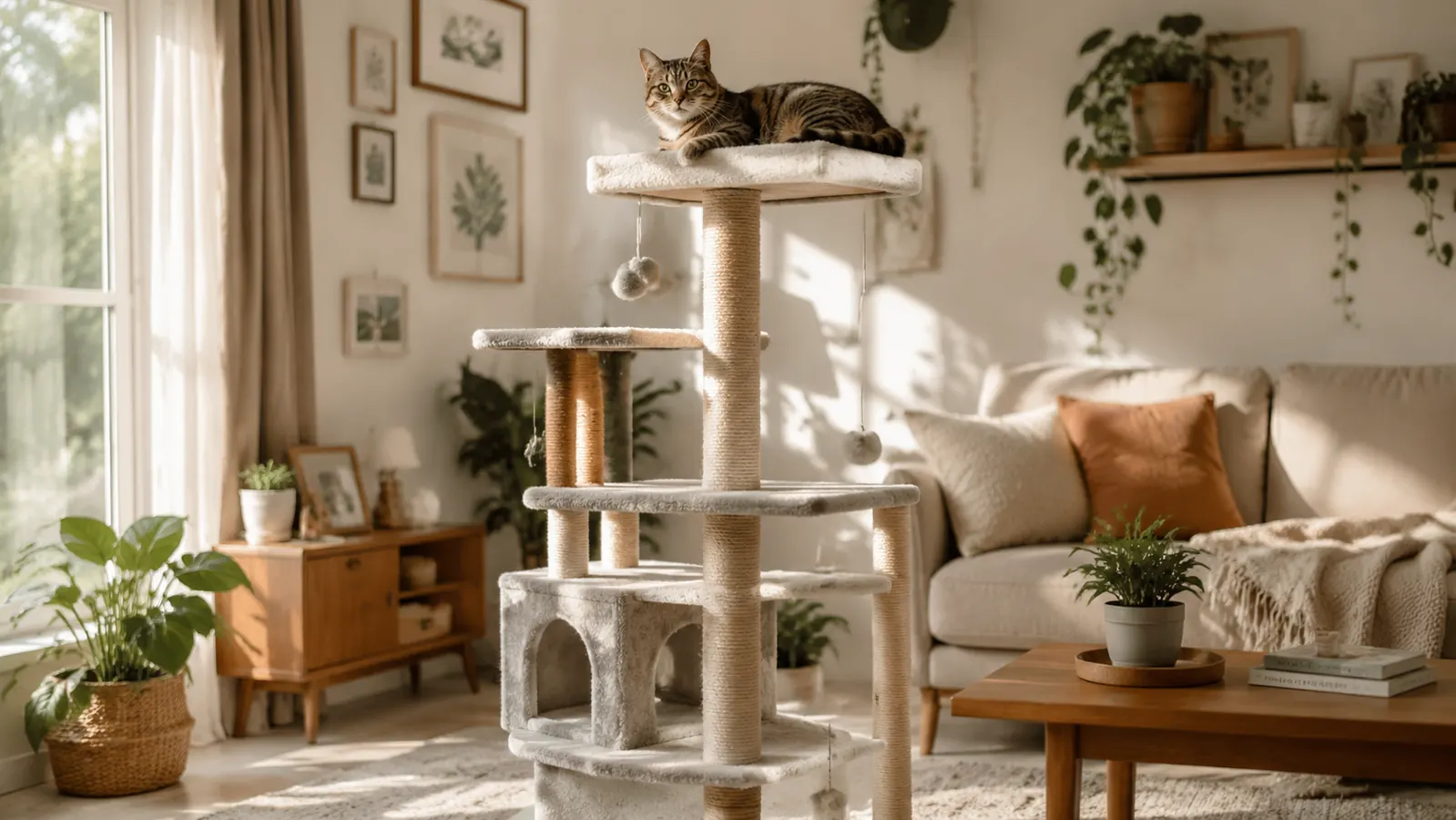
If you've got an indoor cat, you've stared at the cat-tree section on Amazon and seen the same thing I did: a row of towers that all look alike, from one that costs about the price of a pizza to one that costs the price of a decent fishing rod. With a 14-pound Maine Coon and a 12-pound domestic shorthair in my house, I couldn't just buy the cheapest thing that stood up and hope. So I ran my own test over six months: my Yaheetech 63-inch tree, and a budget model that cost about half as much, sitting in the same living room, getting climbed on by the same two heavy cats. Here's what the extra money really buys.
Short answer: if you have one average-size cat that weighs under nine pounds and barely climbs, a cheap tree gets you through a year or two fine. If you have a big cat, more than one cat, or a cat that launches itself from the top platform like it's chasing a radio call on the other side of the room, the cheap tree will wobble, and one day it will tip. That's the difference in one sentence, but it took me six months of living with both to really appreciate it.
And here's the thing I only learned after putting both side by side: the money is never really about the sticker price at all. It's about what the frame is made of, how wide the base is, and whether the platforms are big enough for the cat you actually own. Two towers can look nearly identical in a listing photo and be completely different pieces of furniture once you put real weight on them. That's the part nobody tells you until a tall tree tips over in your living room, which is exactly what a cheap one almost did to me.
| Yaheetech | Cheap Cat Tree | |
|---|---|---|
| Price / value | Mid-range, about 2x a budget tree, but lasts years | Budget, about half the Yaheetech, replaced sooner |
| Material | Solid wood-core frame, dense plush, bolted joints | Thin engineered or cardboard board, softer fabric, friction-fit parts |
| Build / floor stability | Wide weighted base, steady under an 80-lb launch | Narrow base that rocked with cats over 10 lbs |
| Platform size for a heavy cat | Platforms wide enough for a 14-lb cat to sprawl out | Smaller platforms a big cat hangs off the edge of |
| Perch / cave count | Multiple levels with a cave, hammock, and top perch | Often just two or three platforms, fewer choices |
| Assembly | About 45 minutes, clear enough instructions | Faster, but parts can be warped or flimsy |
| Coverings that resist clawing | Thick rope-wrapped posts that hold up to daily use | Thin glued covering that shreds in weeks |
| Warranty / longevity | Wood frame keeps its shape, built for years | Cardboard board sags and softens over time |
If Your Cat Weighs More Than a Small Dog, Buy the Sturdy One
A cheap tree that tips once is a cheap tree all over again. The Yaheetech 63-inch tower is built for the cats that actually climb it.
Amazon Check Today's Price on Amazon →Where Yaheetech Wins
Stability is the whole ballgame with a cat tree, and it's the first place I noticed the difference. My two big boys don't climb a cat tree so much as they mount it, then fling themselves off the top like they're clearing the boards. On the budget tree, that launch made the whole tower rock, and more than once I watched it teeter and had to grab it before it went over. The Yaheetech has a wider base and a sturdier frame, and after six months I have not once seen it move when one of them hits the top platform. That peace of mind is worth the difference all by itself.
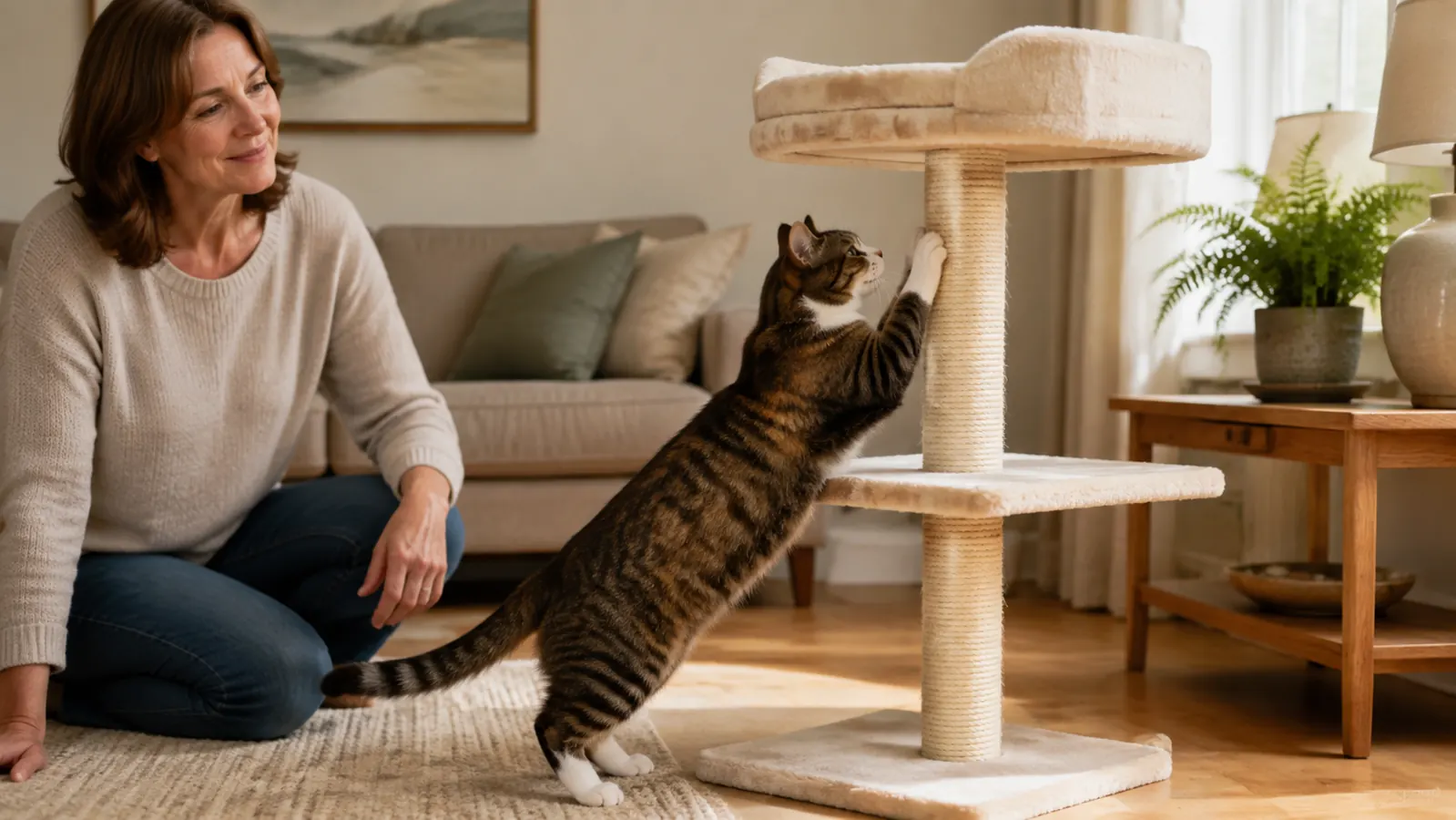
The scratching surfaces are the other place the money shows up, and this is where the budget tree truly fell apart. My Maine Coon, Biscuit, does a full-body stretch on the post every morning, the way a ballplayer stretches in the on-deck circle before a big at-bat. On the cheap tree the thin covering shredded and started pulling off in strings within about three weeks, which meant he just moved his scratching to the couch. The Yaheetech posts are wrapped in thicker rope that has held up to daily punishment, and the plush platforms have stayed dense instead of flattening into cardboard. If there's one metric that decides whether a tree earns its keep in my house, it's whether my cats still scratch the tree at month four. They do.
The platform size is the difference I was slowest to notice, because it doesn't show up on day one. A budget tree is sized for an average cat, and my Maine Coon is not average. Biscuit is 14 pounds with a long, thick body, and on the cheap tree he sprawled off the edge of every platform, one leg often dangling over the side. On the Yaheetech the platforms are wider, so he can stretch out flat without hanging off, and that's what a heavy cat actually wants. A cat that can't spread out comfortably up high will stop using the tree, and then it's back to the couch. The width of a perch is a detail you can't see in a photo, but your cat feels it every single day.
The frame is where the Yaheetech genuinely separates itself from the budget models, and this is the part worth understanding before you buy. A lot of cheap trees are built around thin engineered board, sometimes little more than cardboard pressed into shape. It looks fine bundled up in the box, but it sags under sustained weight and softens where the screws bite over time. The Yaheetech uses a denser, sturdier frame with bolted joints, so the whole structure stays square and tight instead of developing a slow wiggle. Six months in, every joint on mine still feels exactly the way it did the afternoon I assembled it, and that is rare for any furniture in a house with pets.
Because I have two cats, the number of levels matters more than it would in a one-cat home. A tree with only two or three platforms forces both cats to the same spot, and cats that don't want to share will simply fight over the top and ignore the rest. The Yaheetech gives them a choice: a cave near the bottom for the shyer cat, a hammock in the middle, and a wide top perch for whoever wins the high ground. Mine have settled into their own levels and stopped arguing about it, which was never going to happen on a two-platform budget tree. More perches is not a gimmick, it is how you keep a multi-cat house peaceful.
The budget tree shredded its scratching post in three weeks and my cats moved straight to the couch. Six months later I am still scratching nothing but the Yaheetech.
Where the Cheap Tree Wins
I'm not going to pretend the budget tree has no good side, because it does, and if your situation is narrow enough the cheap one is a perfectly fine pick. It's lighter, which made it easy for me to shuffle around the room while I figured out where the cats actually wanted to perch. It went together faster, with fewer pieces and simpler steps, and for someone who doesn't want to spend an evening with an Allen wrench, that's a real point in its favor. And if the tree is for a kitten or a single cat under nine pounds, the wobble I'm fussing about barely shows up, because a light cat doesn't produce the same launch force.
It's also cheaper, and I'd rather be honest about that than pretend price doesn't matter. If you're on a tight budget, if you want to test whether your cat will even use a tree before committing to a nicer one, or if you've got a small cat that only visits the tree a couple times a day, then starting with the cheap model is a reasonable call. It's not a scam, it's not junk. It's just a lighter-duty piece of furniture, and as long as you treat it that way, it does the job. My frustration was only ever that I expected a big cat to use it like a big cat would, and that's on me, not the tree.
There's one more situation where I'd genuinely point you to the budget model, and it's the one most people don't think about: a starter kitten. Kittens grow before your eyes, and there's real wisdom in buying a cheap tree for a five-month-old who's going to double in size, then moving up to something sturdy once they're full-grown. The same goes for a low-traffic home with one light cat, say a six-pound cat that visits the tree twice a day and spends the rest of the day on the back of the sofa. In those narrow cases the budget tree is not a compromise, it's the sensible pick, because the two things it's missing, a wide base and a wood frame, are exactly the two things you don't need.
Who Should Buy Which
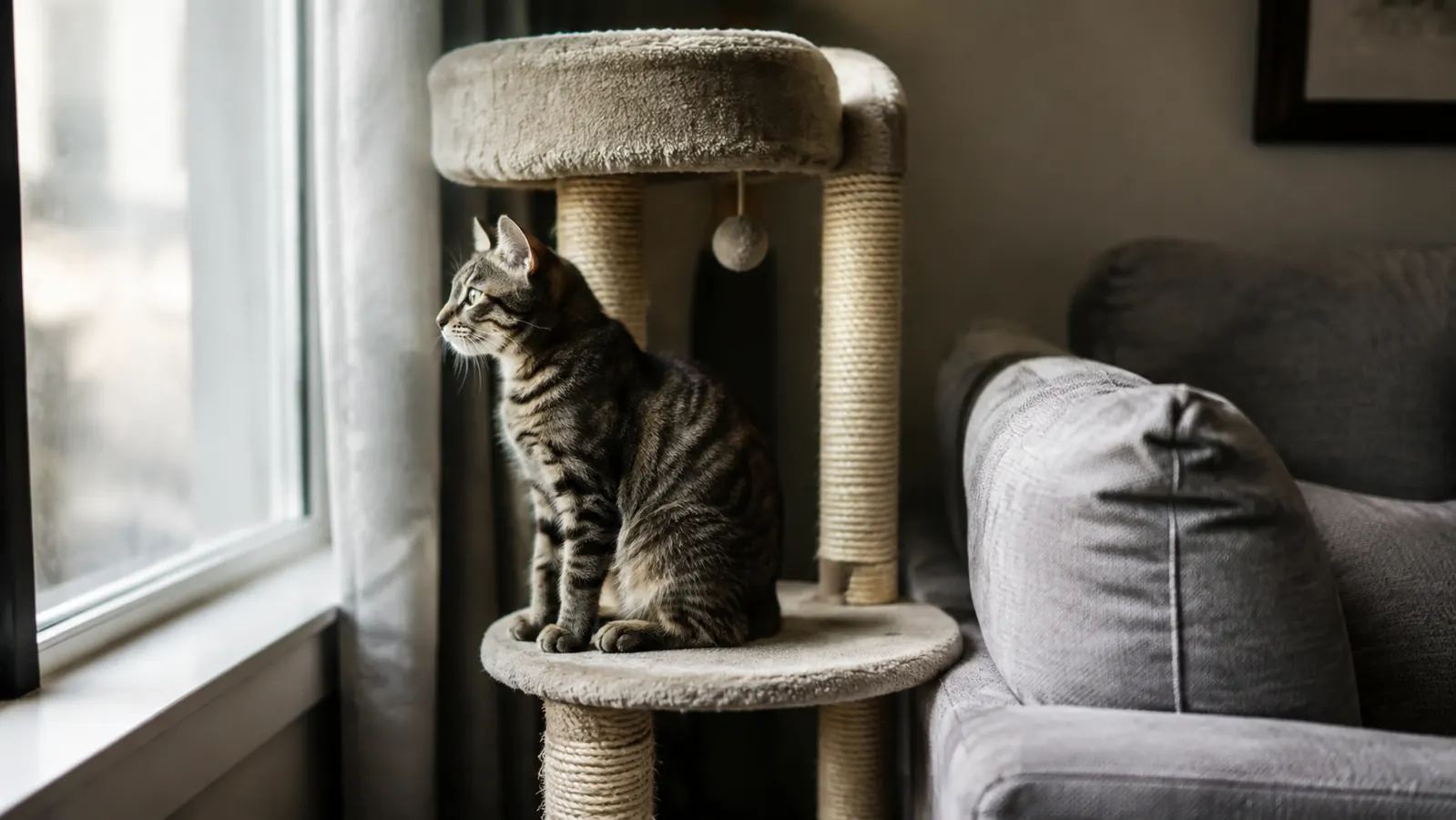
Here's how I'd split it, and I wish someone had said this to me plainly before I bought my first one. Buy the cheap tree if your cat is a single small cat under nine pounds, if you just want to see whether your cat will use any tree at all, or if you expect light, occasional use and want to swap it out when it wears down. Buy the Yaheetech if you've got a big cat, a heavy cat, more than one cat, or a cat that treats the top platform like a launching pad. In every one of those cases the taller, sturdier tower will be the one still standing at month six, which is the part I actually care about.
Let me make that more concrete, because I think we over-rotate on price and under-think weight. Weigh the heaviest cat in your house. If that number is over nine or ten pounds, get the Yaheetech and stop second-guessing. If you have two cats and one of them is big, get the Yaheetech, because they will chase each other up and down it, and the cheap one will not survive that game. If your cat is small and you only have one, a budget tree is a fine starting place, just plan to replace the covering when it shreds. Weight and headcount are the two numbers that decide everything else, and price is the least useful one of the three.
One more note on the wobble, because it surprised me: the floor you put the tree on matters more than you'd think. On carpet both trees felt steadier, because the feet gripped the pile. On the hard floor in my living room the difference showed up immediately, the budget tree rocking on a hard landing while the Yaheetech's wide base barely moved. If your tree is going to live on wood or tile, give the wider base real weight in your decision, because that is exactly where a narrow cheap tree will betray you first.
The Longevity and Resale Question
Here's the part almost nobody budgets for, and it's the reason I think the sturdy tree ends up being the cheaper one in the end: how long it lasts and what it's worth when you're done with it. A budget tree on a cardboard-style board doesn't die all at once. It gets wobbly around month eight, sags on the platforms around month ten, and sheds its covering in patches until you finally throw the whole thing out and buy another. Over three years, that path quietly costs you two or three trees. The Yaheetech, with its wood-core frame and bolted joints, is built to hold its shape through years of daily use, and when you eventually want to upgrade or move, a solid frame has real resale value.
People will happily buy a sturdy used cat tree. Nobody is buying a sagging cardboard one. I've sold the trees I no longer need, and I never touched that budget model a second time. Think of it the way I think about my fishing tackle. A cheap rod that bends and breaks after a season costs more than a good one ever did, because you buy it twice. The same math applies to cat furniture. You are not paying twice as much for a tree. You are paying once for a tree that lasts, and six months of watching mine take a daily beating without a wobble has convinced me it was the right call.
Stop Replacing Your Cat Tree Every Few Months
One sturdy tower beats three cheap ones. The Yaheetech 63-inch cat tree is built to take a heavy cat's daily launch.
Amazon Check Today's Price on Amazon →