
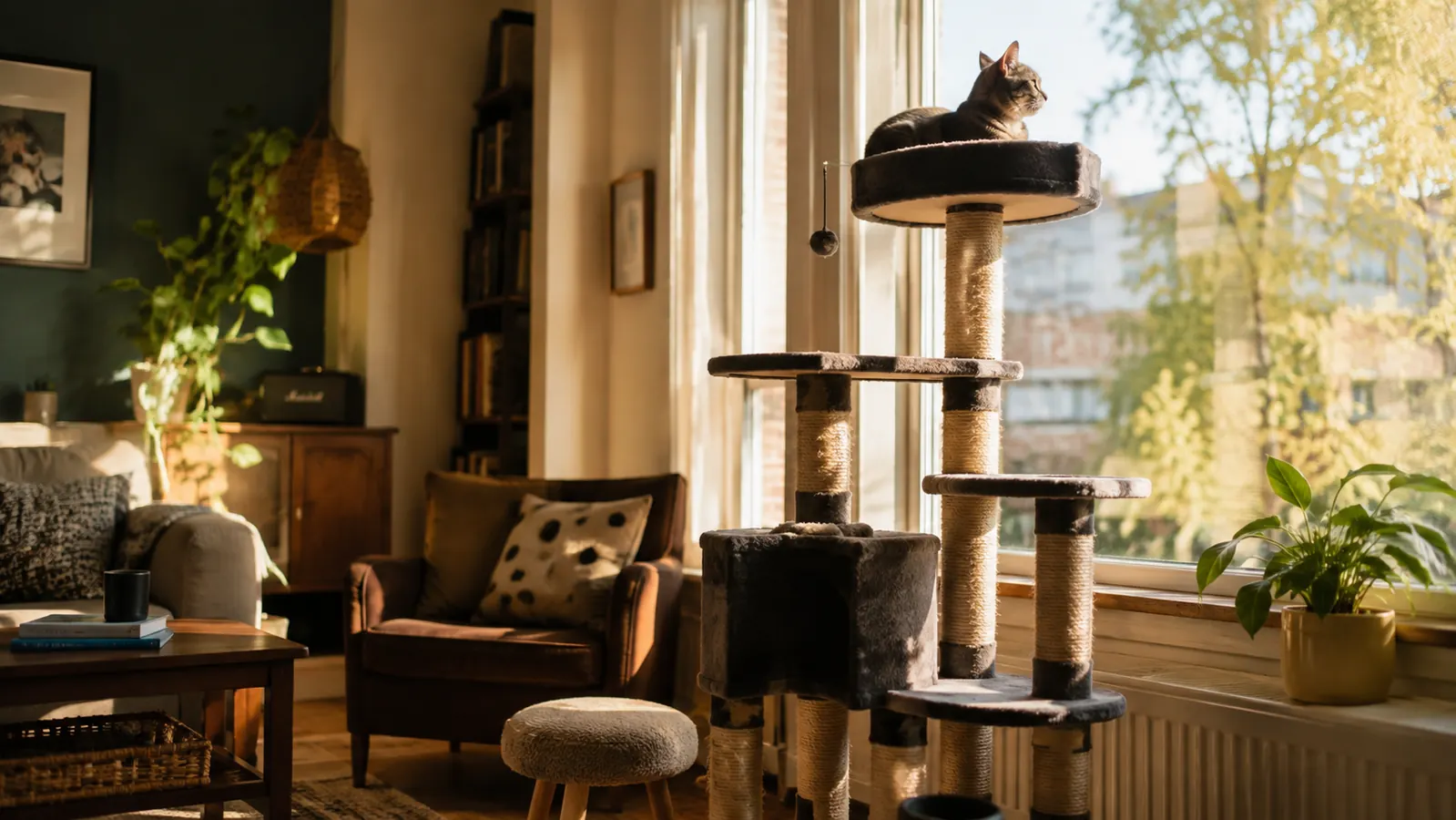
For years I told myself our two house cats, a gray tabby named Mabel and a tuxedo named Gus, did not need a cat tree. They had a windowsill, a cardboard scratcher, and a lap each. Then Mabel, who is thirteen and slowing down, started scratching the corner of the sofa anyway, and Gus started treating the top of the bookshelf as his private lookout. It finally clicked: these two were going to climb and scratch and watch no matter what, so the question was whether they did it on the furniture or on a proper tree. We got one, and honestly the only regret is waiting so long.
Here is the thing about indoor cats. They still have every instinct of the cat that lived in a barn or a forest, they just have to exercise it inside four walls. A cat tree gives them a legal, comfortable place to do all of it. These are the ten reasons that convinced me, based on Mabel and Gus now that they have had their Yaheetech tree for a few months.
The cat tree that finally protected our sofa
After a shredded couch corner and a cat on top of the bookcase, a tall sturdy cat tree with a scratching post and a high perch gave Mabel and Gus a better option than our furniture. This is the style that finally worked.
Amazon Check Today's Price on Amazon →It gives scratching a proper home
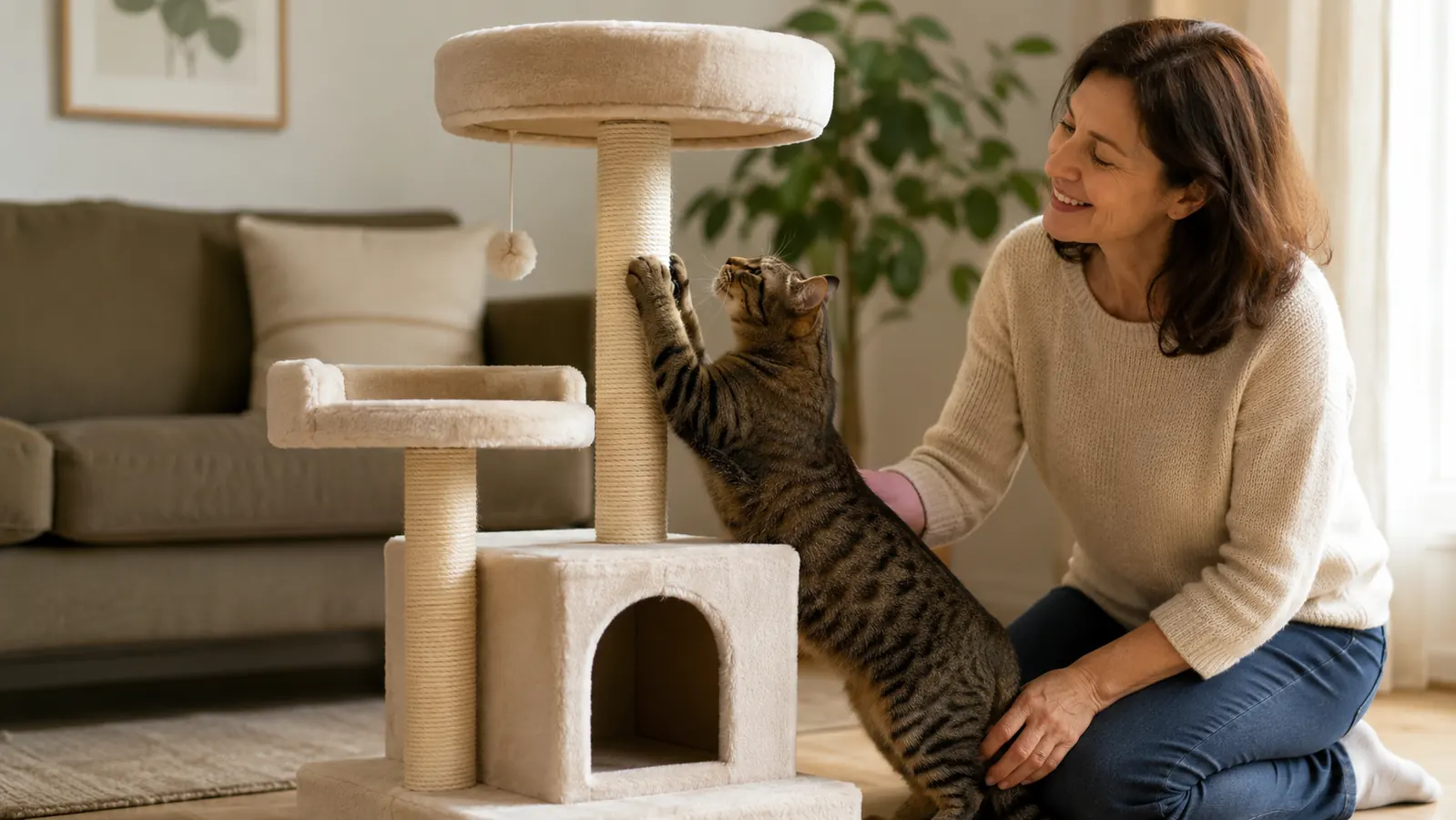
Cats scratch to shed old nail sheaths and mark their territory, it is wired into them. A tree wrapped in sisal rope gives that instinct a place that is actually built for it, instead of your couch arm or the wood of a door frame. Mabel went straight for the rope post the first day the tree went up, and she has barely touched the sofa since. The scratch is going to happen, so it might as well happen on something you are not trying to keep nice.
Indoor cats need to climb
A house cat still wants to be up high, that is how they feel safe and in control. A tree with platforms at different heights gives them a real route to climb, and climbing is good exercise for the muscles and joints. Gus, who is a chunky indoor cat, went up and down his tree a dozen times a day at first, working off a little of that belly. Climbing is the exercise a lap cat will actually do.
It gives them a safe high perch
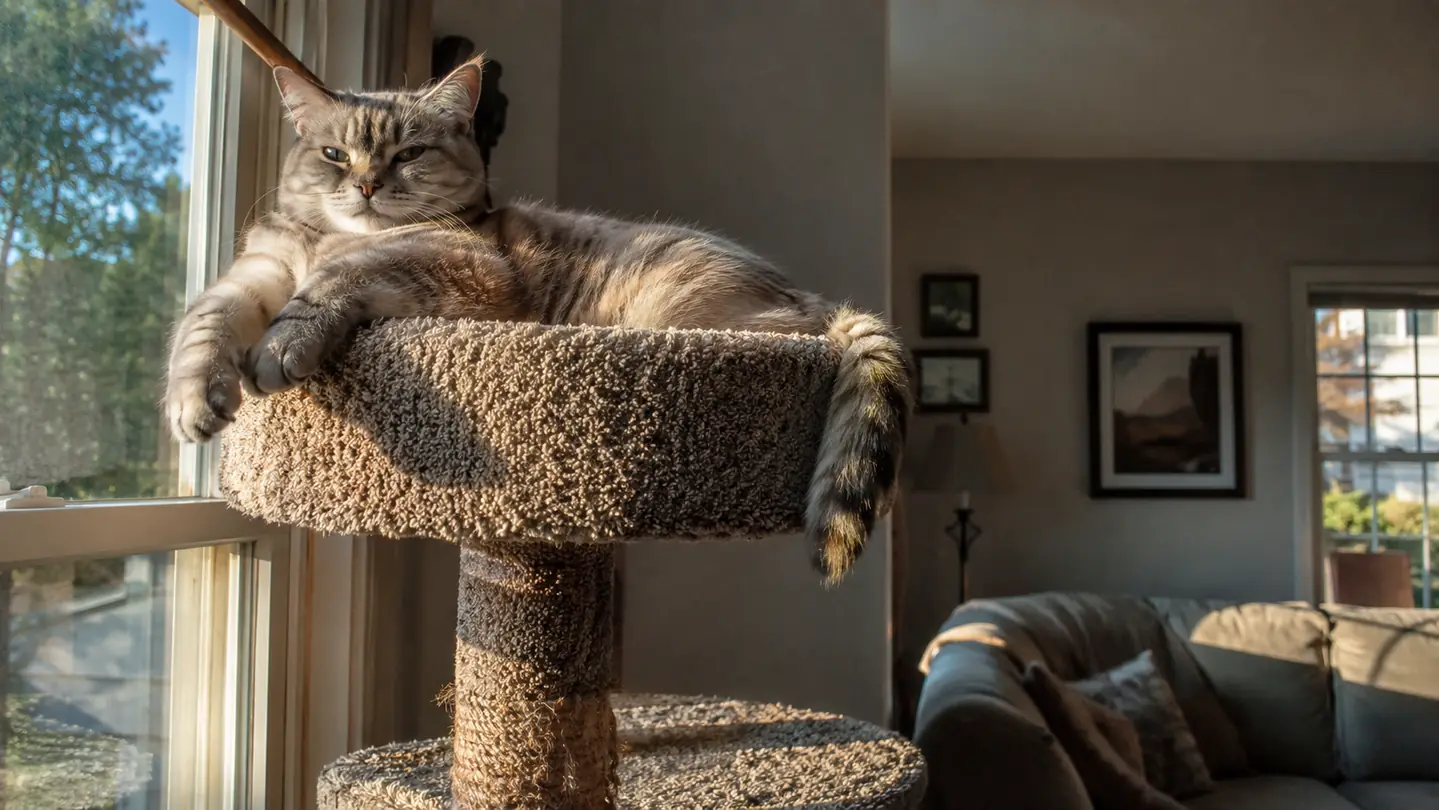
Cats like to be above the action, where they can watch everything without being surprised. A high platform gives them that lookout, and for a shy or nervous cat it is a real comfort spot. We put our tree near the window so Mabel can watch the birds and the neighbor's dog from a spot that is all hers. That perch is where she now spends her afternoons, and it is where she feels safest in the whole house.
It protects your furniture
This is the practical reason most of us cave, and it is a real one. Give a cat a place that scratches better than the couch and stands taller than the bookshelf, and a lot of the furniture attacks just stop. Our sofa corner was already rough before the tree arrived, but it has not gotten any worse since. A cat tree is cheaper than reupholstering or replacing furniture, and unlike a spray bottle it actually goes with what the cat wants to do.
Multiple cats can share the territory
If you have more than one cat, they do not always want to share one good spot. A tree with several perches and hiding cubbies means each cat can claim its own level instead of fighting over the one comfy chair. Our Yaheetech tree has enough platforms that Mabel can take the top and Gus can curl into a cubby lower down, and both of them behave better for having their own space. Territory matters to cats, and a tree hands out more of it.
It keeps claws off the drapes
Drapes are another favorite target, because they hang and move and give a cat something to grab. A tall tree with a sisal post near a window often beats the drapes, because it is the easier, more satisfying option. We moved our tree right beside the curtain in the living room, and it took the drapes right out of trouble. Give them something better to sink their claws into and they will usually pick the better thing.
It gives them a place that is truly theirs
A home is full of your things, and a cat can feel like everywhere belongs to you. A tree is one spot that is unmistakably theirs: their height, their scratching post, their private cubby. Both of our cats started treating it as theirs within days. Gus, who used to be a little anxious with no place to disappear, now has a cubby he retreats to when the house gets busy. A little territory makes a calmer cat.
It helps a shy or senior cat feel secure
An older or nervous cat often wants to be up high and out of the way, where it cannot be startled. Mabel is thirteen and not as spry as she used to be, so we looked for a tree low enough for her to climb and with perches that were not a huge leap. She takes the lower platforms now and still gets to be above everything. A tree can be adjusted to an older cat's comfort, and that is its quiet, underrated job.
A sturdy one holds up to heavy daily use
Cheap cat trees wobble, and a wobbly tree is a cat tree your cat will not trust, which means it goes back to the couch. A tree with a wide base and solid construction stands firm even with a heavier cat climbing on it. Our Yaheetech has a stable base that does not rock when Gus launches onto the top, and nothing has loosened after months of daily use. Buy for sturdy and it lasts, buy for price and you will buy twice.
It keeps an indoor cat happier and more active
Here is the honest payoff: an indoor cat with a tree to climb, scratch, and nap on is a busier, less bored, happier cat. Bored cats get into trouble, they scratch things, knock things over, and act out. A tree gives that energy somewhere to go, so everybody in the house is calmer. It went in last spring and it has quietly turned into the best furniture purchase we have made in years. That is why I tell every indoor-cat owner to start here.
What I'd Skip
A cat tree helps a lot, but it is not a one-size-fits-all answer, and a few things are worth skipping. First, skip a flimsy, wobbling tree if you have a heavy cat or a jumper; a tree that rocks will scare the cat off and defeat the whole point. Spend on a sturdy base. Second, skip assuming one tree is enough for every home: if all your scratching trouble is in one room, put the tree there, because a cat tree in the wrong room gets ignored. Place it where the cat already spends time, and give it a chance near the trouble spot. And third, skip the fancy extras that do not matter to your cat; ours ignores the dangling toys and uses the perch and the post. Watch what your cat actually does, then buy for that.
The day Mabel stopped clawing the sofa and started scratching the rope post instead, I knew the tree was not a luxury, it was the furniture she had been trying to build all along.
Give your cat somewhere better to scratch and climb
A sturdy cat tree is the cheapest way to protect your furniture and give an indoor cat a perch, a climbing route, and a place that is all its own. Measure your space, then check today's price on the Yaheetech tree that finally gave Mabel and Gus a better option than the couch.
Amazon Check Today's Price on Amazon →