
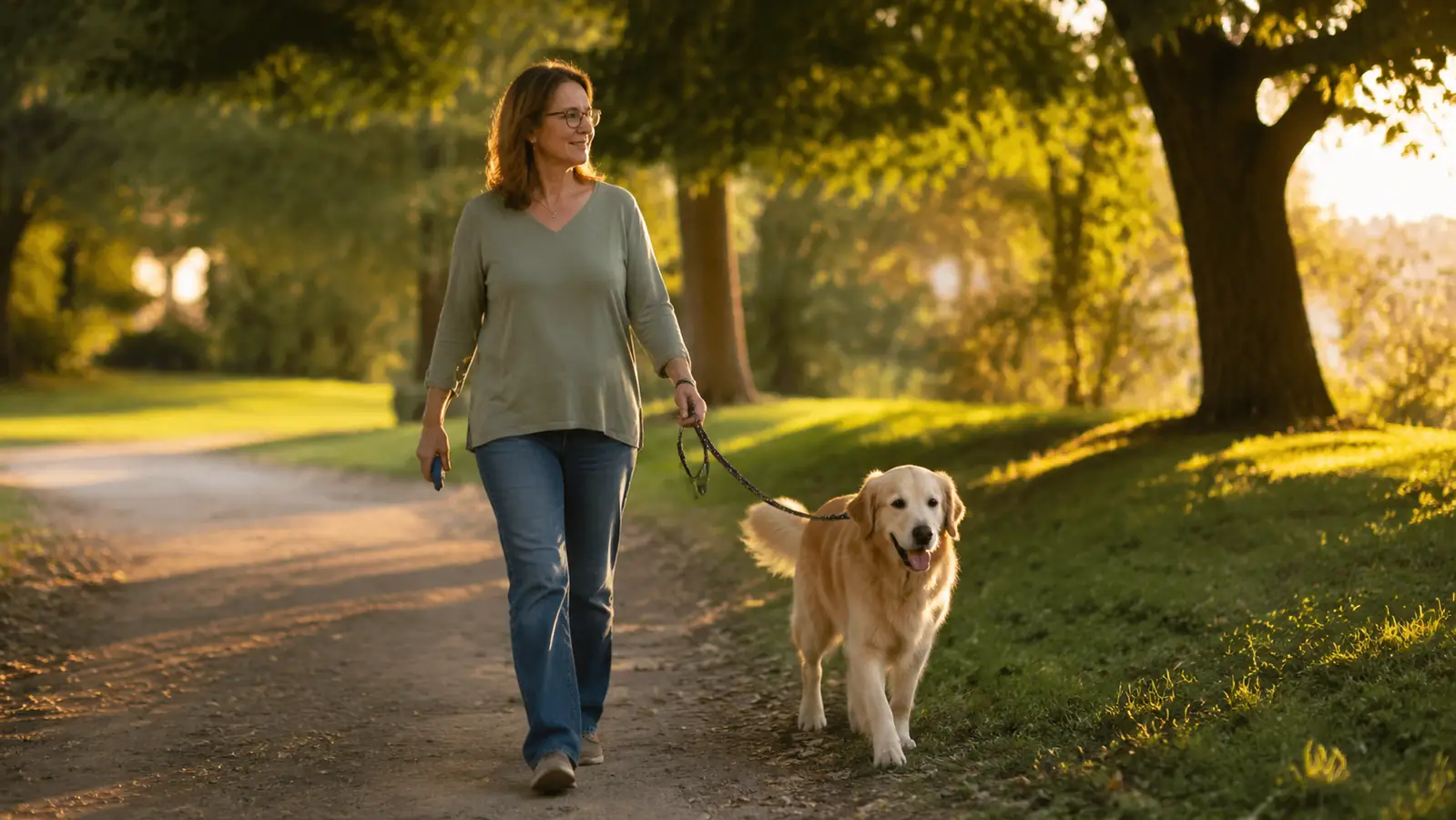
Three years ago I nearly gave up on walking Cooper, my 90-pound rescue Lab mix. Every walk started the same way. I'd clip the leash to his collar, step off the porch, and he'd be gone, hauling me down the sidewalk like a water skier behind a boat.
On a Saturday trip to the river he pulled so hard he dragged me through a wet ditch. My shoulder ached for a week, and the part that scared me most was what the vet had to say. All that leaning was wearing on his neck, and the collar I'd been clipped into was the worst thing for it. I was tired, embarrassed, and honestly a little afraid of my own dog.
So I tried the usual fixes. A head halter he hated so much he'd rub his face in the dirt to get it off. A strict no-pull rule, treats in a fanny pack, the works. Nothing stuck for more than a few days, because Cooper was smart enough to know that collar meant business, so he just leaned harder.
Then a friend whose dog used to be worse let me borrow her rabbitgoo no-pull harness, the kind with a clip at the chest. I buckled Cooper into it with low expectations, the way you try any crumb of advice after you've given up hope. The first walk was the first one in two years where my arm didn't go numb by the end of the block.
The harness that finally gave me back my walks
After a year of daily use, this is the one I keep reaching for. No hype, just control on the leash and a calmer dog.
Amazon Check Today's Price on Amazon →I didn't trust it at first, so I tried it again the next morning and the morning after that. Part of what sold me is that front clip. When Cooper lunged or spotted a squirrel, the harness turned his chest toward me instead of letting him dig in and pull. He still pulled some. But for the first time in years, I had a say in it.
By week three, Cooper had stopped leaning into the leash. He started looking back at me, like a dog that finally understood we were walking together instead of playing tug.
Over about three weeks the pulling faded to an occasional lean, and what replaced it surprised me more than the harness itself. Cooper started checking in with me on the walk, glancing back to see where I was going. It dawned on me that he'd never had a reason to before, because the fight was all he knew. Give him a way to walk without fighting, and the fight just went away.
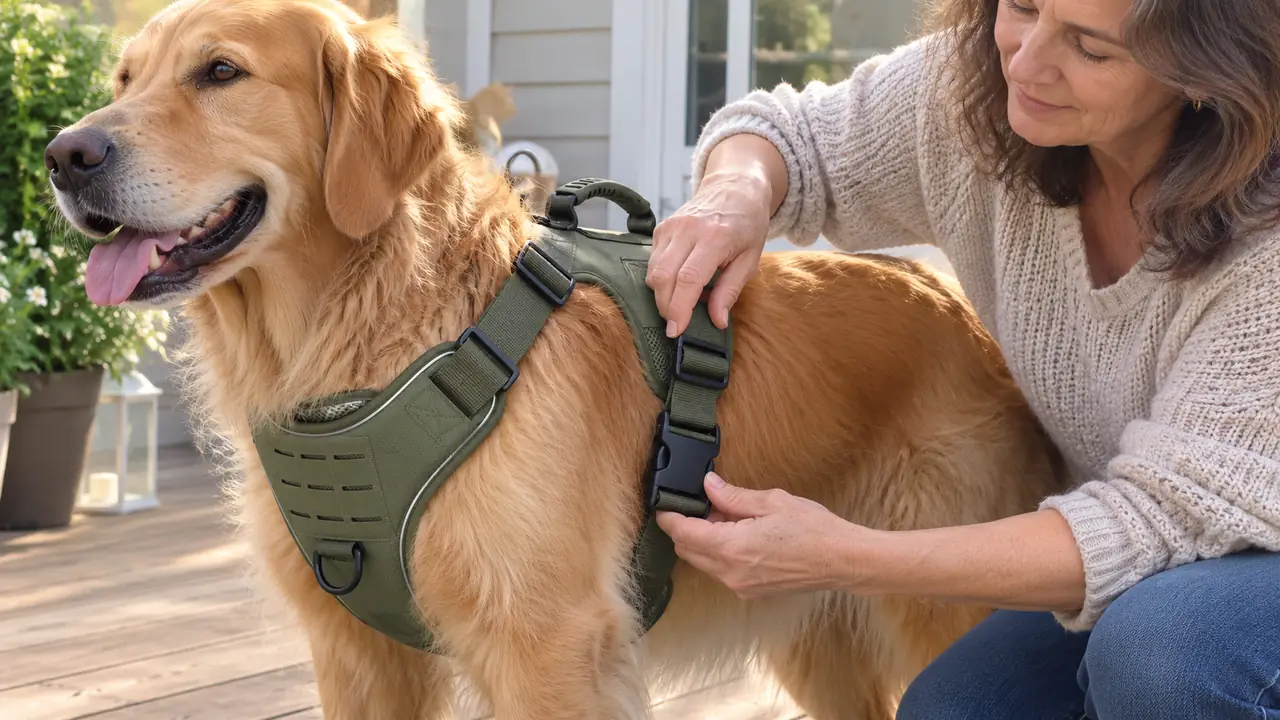
Fitting took one honest look at the size chart and two minutes at the kitchen table, and that's where I'll give you the one warning that genuinely matters. The padded straps need to sit snug but not tight, and you want to be able to slide two fingers flat between the fabric and his chest. If it's loose enough to slide around, it will chafe and he'll fight the whole walk. That first week I had to pull the straps back out and reset them, but once I did, he stopped fussing with it entirely.
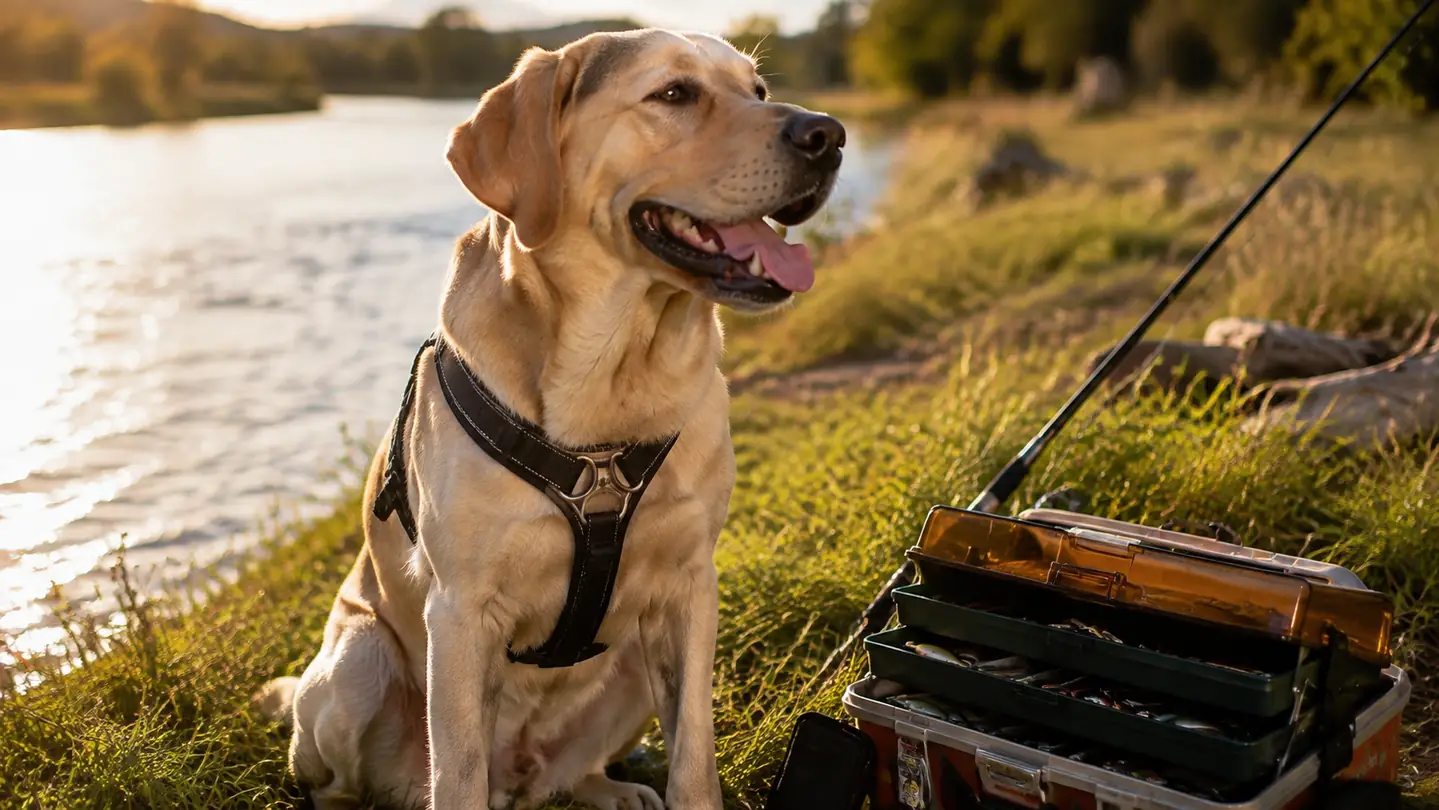
I've had this rabbitgoo on him for over a year now, and it has become the piece of gear I reach for before the leash, before the treats, before anything else. It has held up through muddy riverbanks, a rough stretch of pre-dawn runs, and one memorable chase after a deer that neither of us is proud of. The padded panels sit flat instead of bunching up under his chest. Both clips still click. And I've washed it twice without it falling apart on me. For a dog that wins every tug he starts, that staying power is the reason I have not shopped for another harness since.
The chest clip is what I use for everyday control, and that's part of why I don't ever take it off. When Cooper decides the neighbor's cat is the most important thing in the world, that front clip turns him back toward me smooth instead of fighting him arm to arm. It is the difference between steering a dog and wrestling one.
It is not a fix-all, and I want to be straight with you about that. Cooper still has opinions about squirrels. He gets excited at the park. But the difference between getting dragged down my own street and taking a dog on a pleasant walk is real, and it showed up inside the first week.
What I'd Tell You If We Were Sitting at My Kitchen Table
If I had you here with a cup of coffee, here's what I'd say. A harness is not a magic wand, and no one should sell you one like it is. If your dog pulls because he's scared or anxious, a harness alone won't fix the root of it, so talk to your vet before you expect the world. But if your dog pulls hard enough to hurt you or himself, do your shoulders and his neck a favor and try a no-pull harness before you give up on walks the way I almost did.
That is the honest version. I didn't fix every walk overnight. What I did was stop dreading the front door, and for anyone with a big, strong, stubborn dog, that is a bigger win than it sounds like. A harness like my rabbitgoo handed me back something I'd forgotten walks were supposed to be: time outside with a dog who actually enjoys being out there with me.
Give your arms and your dog's neck a break
If you've been putting up with a puller, you don't have to. See today's price and decide for yourself.
Amazon Check Today's Price on Amazon →