
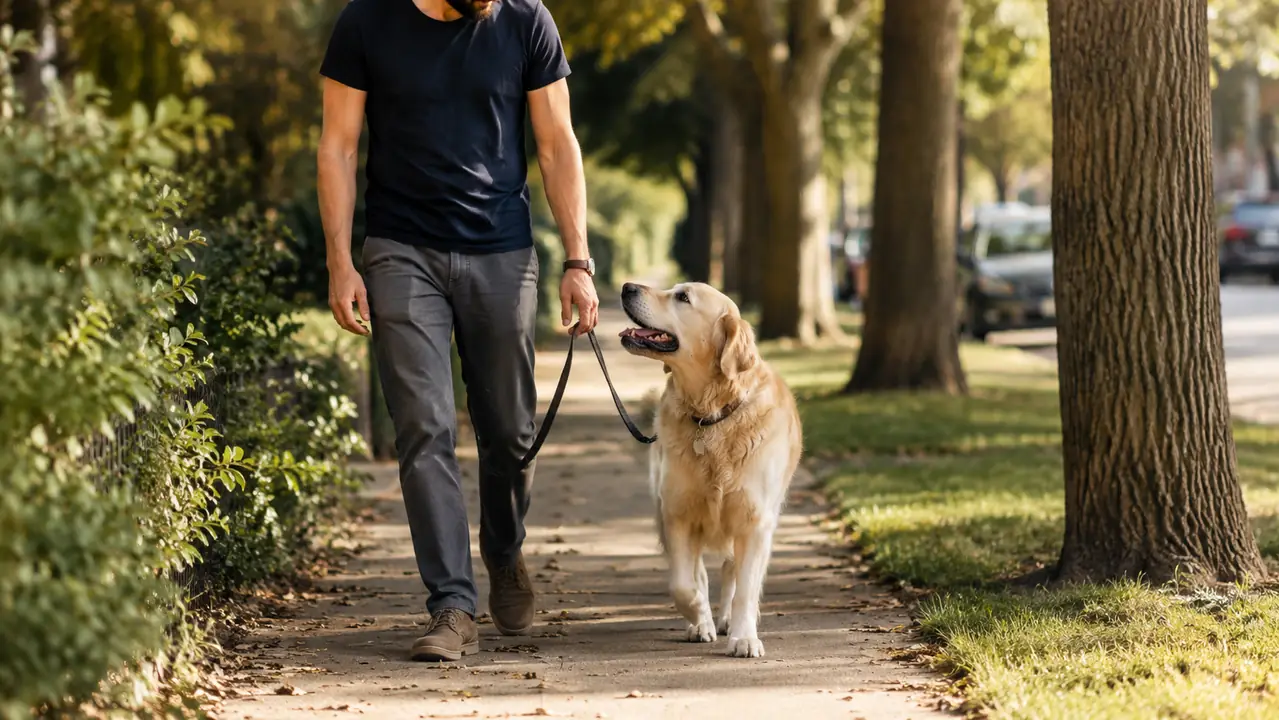
If your dog is anything like our black Lab Duke, you know the walk before the walk: the lunge at the front door, the sprint to the corner, the constant tug hold on the other end of the leash. For months I blamed Duke. Then I switched him from his collar to the rabbitgoo no-pull harness, and I realized the real problem was what I had him clipped to. That harness made the familiar, exhausting pull almost disappear overnight, and it did it without me having to jerk him back even once.
I get why a lot of us start with a plain collar, it is what everyone has. But once you see how a harness changes the physics of the leash, it is hard to go back. Here are the ten reasons that finally made me switch, and the specific no-pull harness, the rabbitgoo front-clip style, that did the job for Duke.
The harness that tamed our 70-pound puller
After years of collars and sore arms, a padded no-pull harness with a front clip finally gave us control without the choking and coughing. This is the exact style that changed our walks.
Amazon Check Today's Price on Amazon →It takes the pressure off your dog's neck
A collar concentrates all of your dog's pulling force into the windpipe and the small bones of the throat. A harness spreads that same force across the chest and shoulders instead. For a strong dog like Duke, that is the whole difference between a walk and a choke session, and it is a lot easier on your own arm in the process. Duke's pulled so hard before that his collar rode up around his ears, which is both funny and a sign something is wrong. Moving that pressure to his chest fixed it. We ended up with a rabbitgoo, a padded front-clip harness, and it has held up through months of daily walks.
The front clip gives you real steering
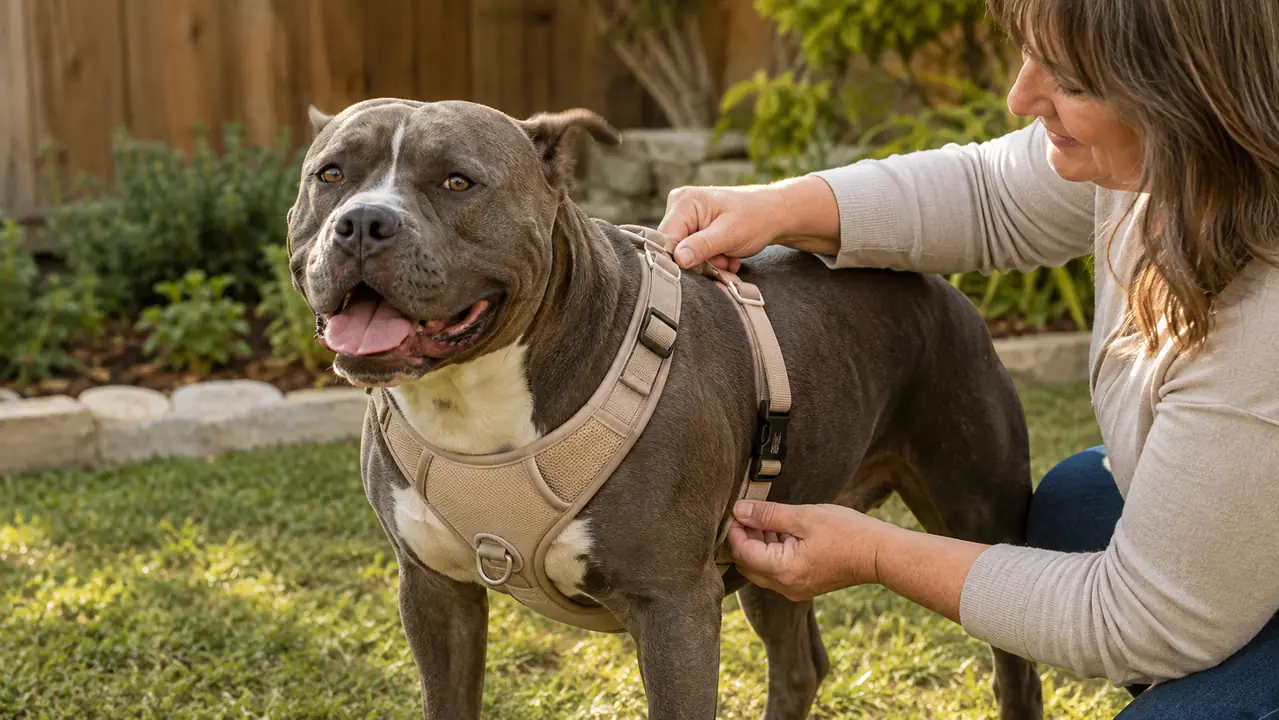
The best no-pull harnesses put one attachment point on the chest, between the shoulder blades, not on the back. When a front-clipped dog pulls, the harness turns them gently back toward you instead of letting them drag onward. It is not a miracle, but it works with how a dog moves rather than against it, and that is what stops the pull at the source. You can feel the difference the first walk: when he hits the end of the line at the front clip, he turns his head toward you instead of dragging on. It does half the training work for you.
It stops the gagging and coughing
Duke used to cough and gag on collar walks, especially when something caught his nose and he lunged. A harness that clips at the chest and shoulders puts nothing on his throat, so that gagging stopped the first week. If your dog makes that hacking sound, that alone is reason enough to switch. It was not just the noise, either. He was calmer once nothing pressed on his windpipe, so the whole walk went quieter and smoother from the very first trip out the door.
It is safer near traffic and other dogs
A strong puller that breaks free of a collar near a street is a scary thing. A well-fitted harness is much harder to back out of, because it wraps the body instead of just the neck. That extra hold gave me real peace of mind when we crossed roads and walked past other dogs.
Training happens faster because you can reward slack
You cannot reward a dog for not pulling if the leash is always tight, so the first step of any loose-leash training is taking away the reason to pull. With a harness and a front clip, you can drop the tension, let the dog feel the slack, mark it, and reward it. Duke figured out that loose leash meant the walk kept going, and the habit built from there. We spent two months on the loose-leash habit, and the harness is the reason it stuck. He still gets excited, but he settles fast because the gear itself does not fight him.
It keeps your dog comfortable on long walks
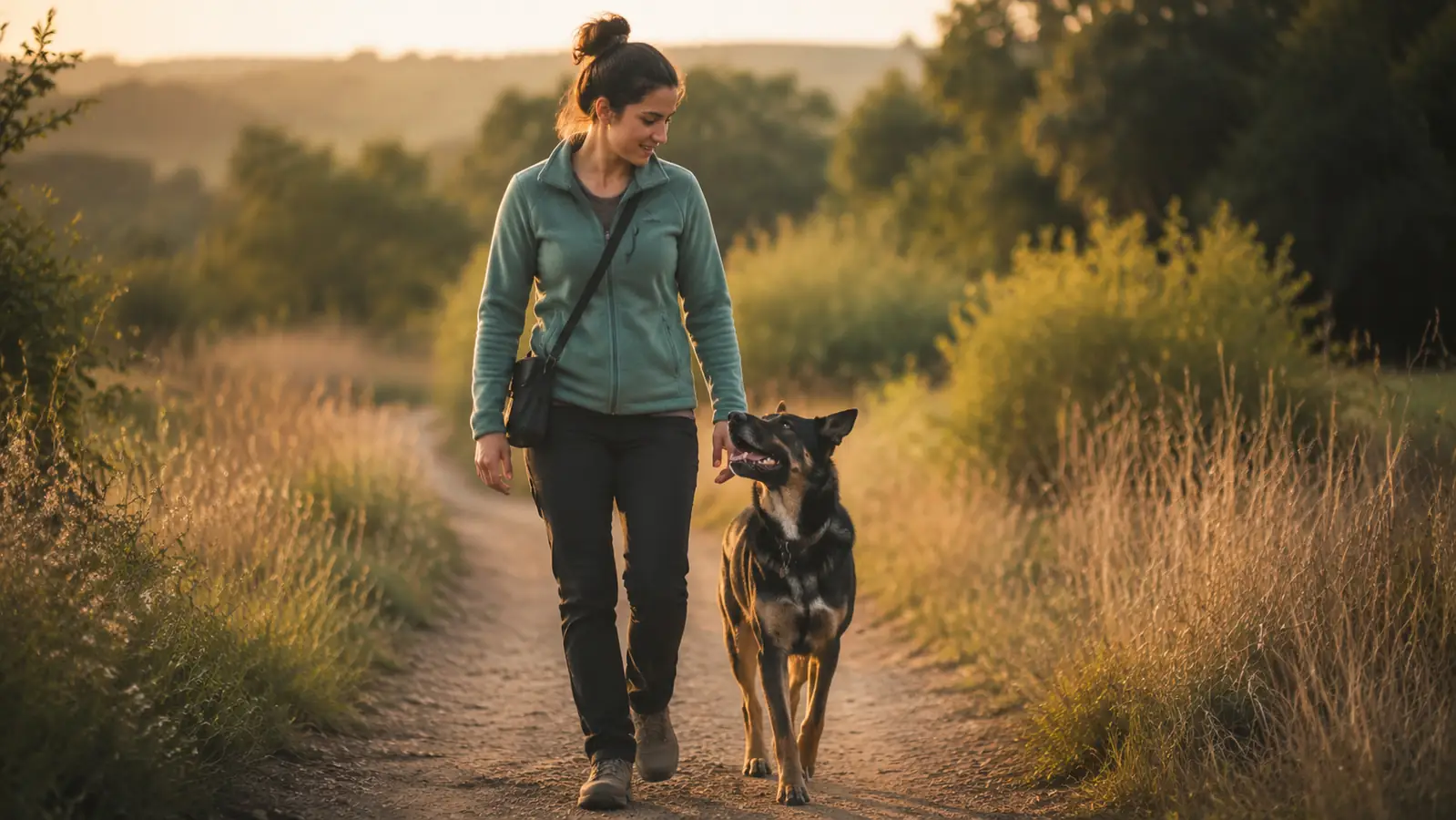
The padded chest and shoulder panels sit where the muscle is, not the throat, so a harness stays comfortable even on a two mile walk. That matters on a long Saturday, whether we are heading out for a hike or just doing a slow lap of the neighborhood on the way back from the river. On days when we take the long route, that padding is the difference between a dog who is comfortable for the whole loop and one who is sore by the last stretch. I noticed it more than he did.
It helps with a reactive or anxious dog
When a dog is anxious around other dogs, a collar makes it worse because every tightening of the leash adds more pressure and more panic. A harness lets you guide and redirect without constant tension on the neck, which keeps the moment calmer for both of you. It does not fix the reactivity, but it stops the harness from adding to it.
Two clips mean you can switch up your walk
A good no-pull harness has a second clip on the back, not just the front. Clip at the chest for training and control, then move to the back clip once your dog is walking politely. Having both options in one harness means you are not buying a new piece of gear every time the walk changes. It is a small thing, but switching clips has become part of our routine. Training walks use the front, easy Saturday strolls use the back, and one harness covers both without another purchase.
It protects against escape from a loose collar
Some dogs, and Labs are famous for it, can slip right out of a collar if they squat and back up. A harness that goes over the head and fastens under the chest is much harder to slip. For a dog that has ever gotten away from you, that bit of extra security is worth it all on its own.
You will actually want to walk more
Here is the honest payoff: when the walk stops being a tug of war, you look forward to it again. Duke and I went from dreading the front door to taking the long way around the block. More walks is the best thing that can happen to your dog's weight, your bond, and your own step count, and a harness is a big part of why that change stuck. That is the reason I tell every friend with a puller to start here. A comfortable, well-fitted harness costs little and changes the daily walk more than any training trick I have tried.
What I'd Skip
A no-pull harness fixes a lot, but it is not magic, and two things are worth skipping. First, skip a back-clip-only harness if your dog is a strong, determined puller and expect it to stop the pulling, it will not do much. Look for the front chest clip. Second, skip buying any harness without measuring your dog's chest and neck first, a too-big harness lets them slip and a too-tight one chafes. Take the ten minutes to measure, and order the size that fits, it makes every other benefit on this list actually work.
The moment I saw Duke trot with a slack leash instead of pulling me down the block, I knew the collar was the problem, not the dog.
Start with a harness that fits before you try anything else
A padded no-pull harness with a front clip is the cheapest place to start fixing a pulling problem, and it is the thing I would buy first. Measure your dog, then check today's price on the rabbitgoo harness that finally gave us calm walks.
Amazon Check Today's Price on Amazon →