
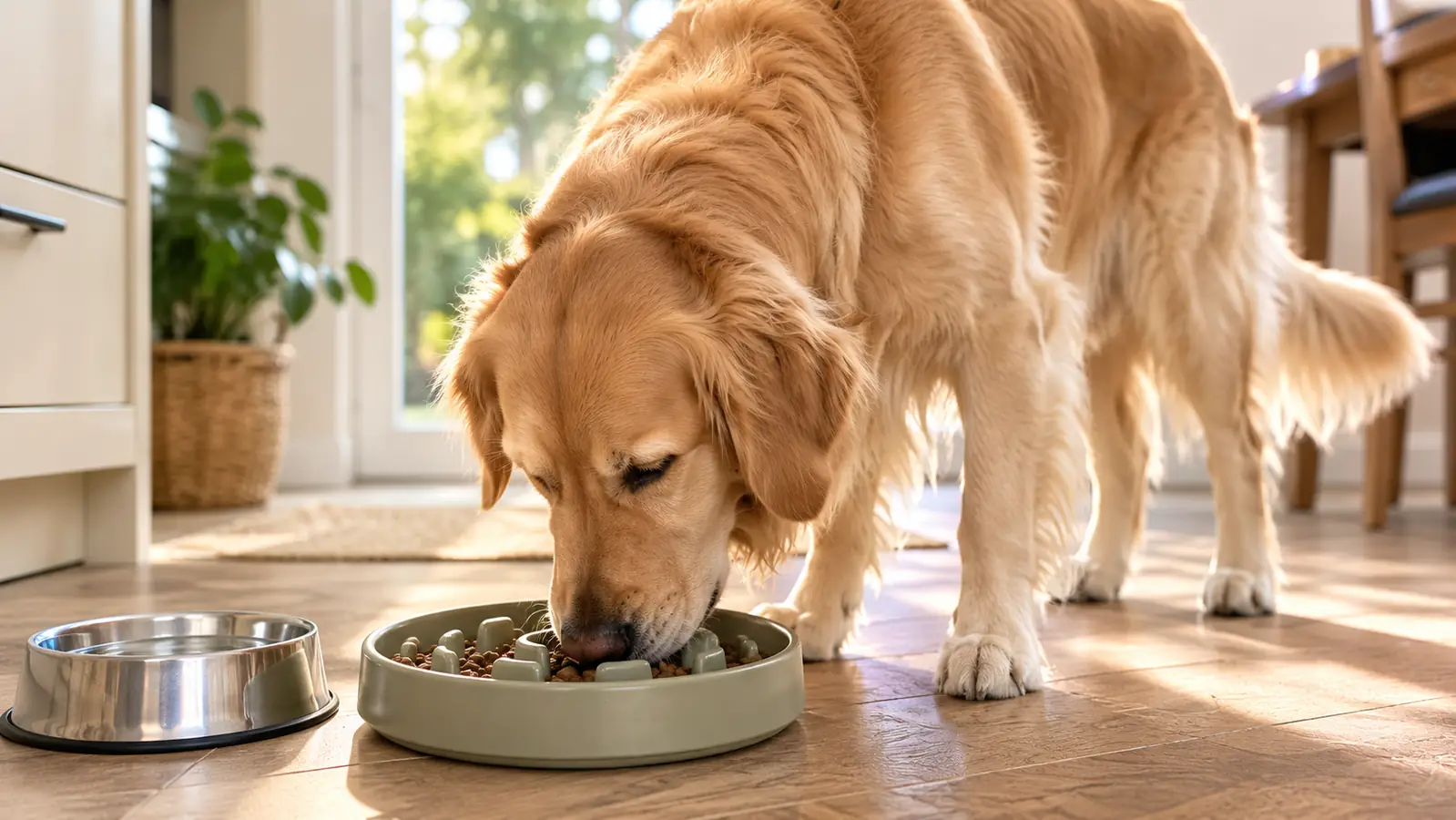
If your dog eats like mine does, you already know the problem. You scoop the kibble, you set the bowl down, and it is gone before you finish turning from the sink. Then comes the part nobody warns you about: two minutes later he is hacking a little, licking the bowl shiny, and eyeing the cat's plate like he never ate at all. I read every slow feeder bowl review I could find before I bought this one, and almost all of them were glowing. So let me tell you what the glowing ones leave out.
I am Maggie, and I have fed dogs for long enough to have tried the scatter-the-food-on-a-towel trick, the muffin tin, and the bowl with the rubber nubs. This review is about the Outward Hound Fun Feeder Slo Bowl, and it is based on months of real meals, not a two-day photo shoot. I will tell you what it fixes, what it does not fix, and exactly which dogs should keep their money in their pocket.
The Quick Verdict
A genuinely effective slow feeder that cut my dog's mealtime from about ninety seconds to over eight minutes, though it is not dishwasher-stress-free and the smallest kibble will test your patience.
Amazon Check Today's Price →If Your Dog Inhales Dinner, This Is the Bowl That Puts the Brakes On
It slowed my gulper from ninety seconds to eight minutes without a single vomit incident in months. If you are tired of the after-meal hacking, this is the fix worth trying first.
Amazon Check Today's Price on Amazon →How I've Used It
My test subject is Leo, a 60-pound mutt who was the runt of his litter and has made up for it at every bowl ever since. I brought the Outward Hound Slo Bowl home back in March and have used it for every single meal since, which works out to somewhere north of four hundred feedings. No special diet, no puzzle-training sessions on top of it. Just the bowl, his regular kibble, and normal life.
I timed him a few different ways over the months. With his regular bowl he was done in about ninety seconds, and roughly one meal in five came back up somewhere in the house. With the Slo Bowl, the same portion took him anywhere from eight to eleven minutes. That is not a small improvement. That is the difference between a dog who vacuums food into his chest and a dog who actually has to slow down, chew, and take a breath in between.
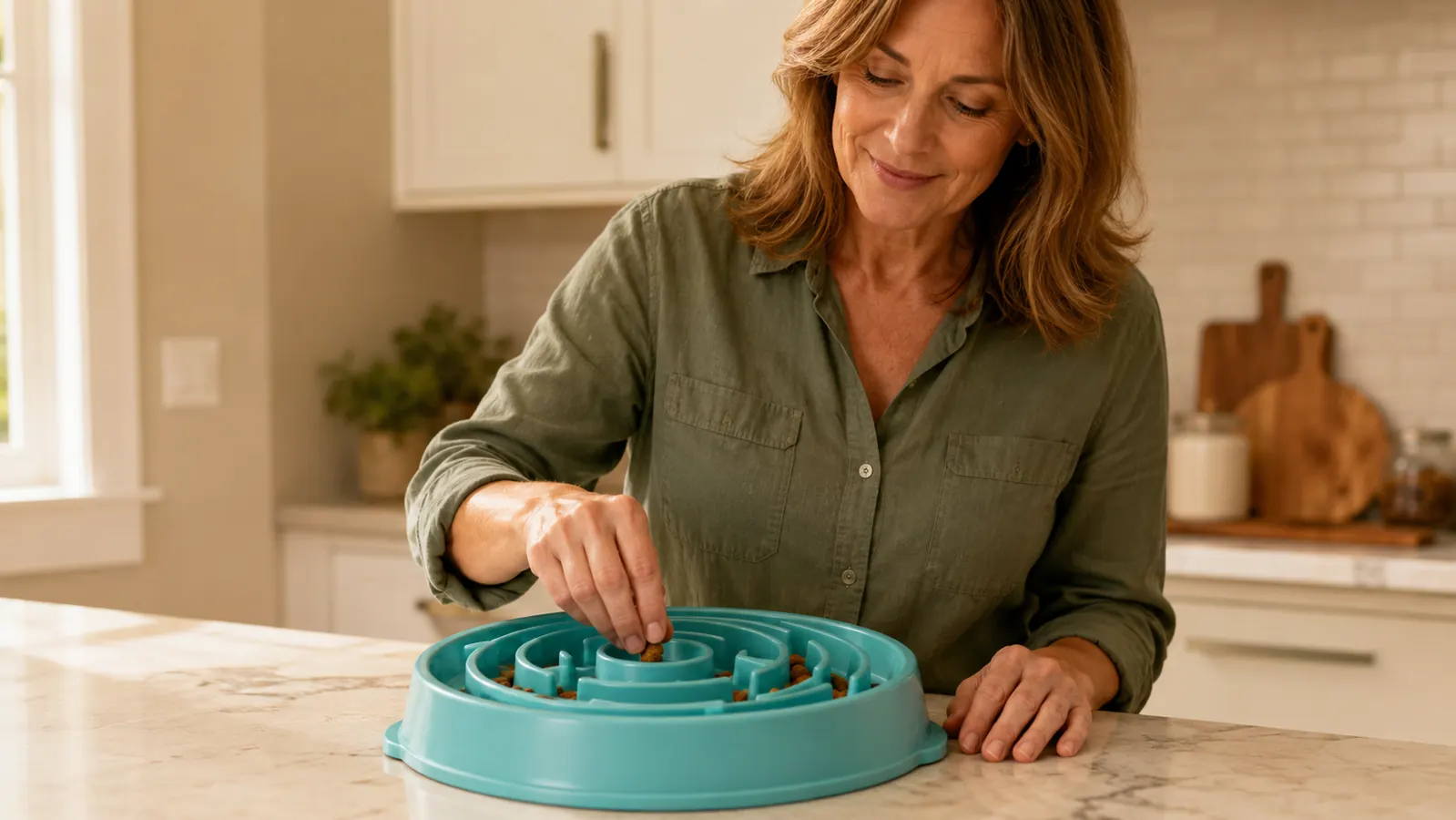
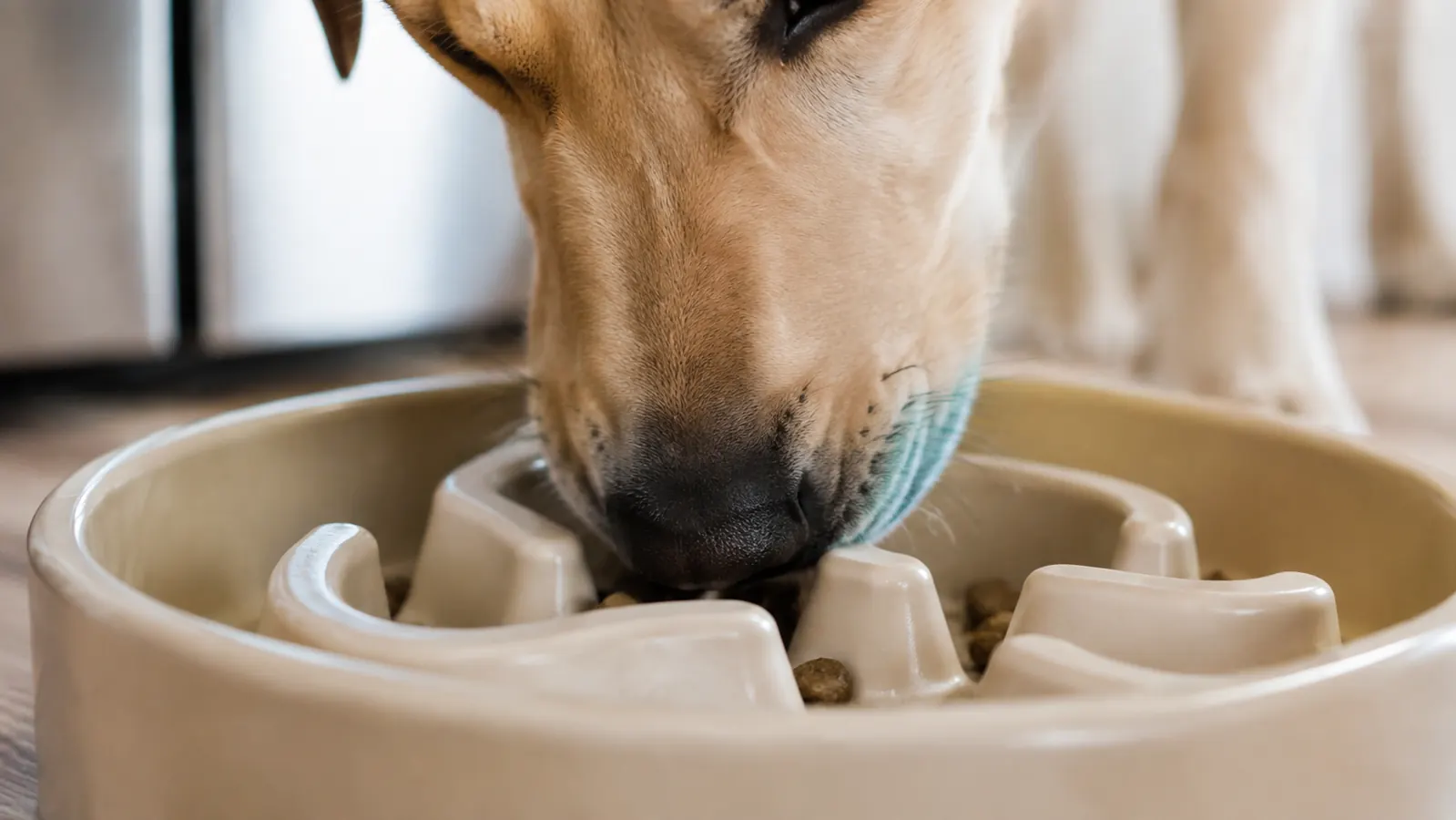
The mechanism is simple once you see it. The inside of the bowl is a maze of raised ridges, and you pour the food between them rather than on top. Instead of hoovering a flat surface, your dog has to work each ridge, which breaks a big meal into dozens of tiny eating decisions. The mental work is what does it, not the bowl material or any gimmick. That is why a cheap muffin tin can work in a pinch, but the tin slips and spills and the Slo Bowl does not.
What It Actually Slows Down, and What It Does Not
Let me be precise about the headline promise, because this is where reviews get vague. The Slo Bowl will slow down a dog who gulps because he is competitive or anxious at mealtime. Leo stopped scarfing, he stopped gagging, and the after-meal upheavals stopped almost entirely. In four months I can count on one hand the number of times I had to clean up after him. That alone made it worth it for us.
But here is the honest part. If your dog is the type who flips a bowl over and then eats off the floor, the Outward Hound's non-slip base helps but will not stop a determined tipper. And if your dog's fast eating is really a symptom of something else, like a stomach issue or resource guarding around other pets, a slow feeder bowl is not a medical tool. It is a pace control. For Leo it was all he needed, but I want to be clear that it is not a cure-all, and no bowl should be treated as one.
In four months I could count on one hand the times I had to clean up after him. That is the whole ballgame when your dog once threw up after a third of his meals.
Cleaning Is the Part Nobody Tells You About
Here is the honest review part that the five-star listings conveniently skip. This bowl has a lot of ridges, and those ridges are exactly what makes it work and exactly what makes it a chore to clean. Kibble dust collects in the grooves, and the chewed-up, saliva-wet mush has a way of wedging itself in there that a rinse does not touch.
The box and the listing say it is dishwasher safe, and it is, but I found it does not come out fully clean in our dishwasher on a normal cycle. The ridges that are practically vertical, those are fine. It is the underside of the raised maze where food sneaks in. My routine is a quick rinse plus a run through the dishwasher, and maybe once a week I take the scrub brush to it. That is a small thing, but I think you deserve to know before you buy that this is not a set-it-and-forget-it bowl like a plain dish.
If you feed wet food or a raw-style mix, budget for a little more scrubbing than with dry kibble, because the moist food cakes into the grooves and hardens there overnight if you do not rinse it before you go to bed. I learned that the slow way. Treat the Slo Bowl the way you would any textured dish and give it a rinse while the food is still soft, and the once-a-week brush stops being necessary.
What the Marketing Doesn't Tell You About Slow Feeders
Here is the part the product page never puts on the box. A slow feeder is not a guarantee, and it does not work the same for every gulper. Some dogs, especially the smart ones, learn to beat the maze. Leo never did, but I have watched enough friends' dogs to know it happens. A determined dog will work the food the way a golfer works a green, nudging each piece out between the ridges with the side of his tongue until he has rolled it to the rim and swallowed it whole.
There is a second thing the reviews leave out. A lot of dogs figure out that the food resting on top of the rim, the part above the maze, is free. So they lick that rim clean in the first thirty seconds and slow down only for the pieces trapped below. That still slows the overall meal, but it happens at the end rather than the start, and the frantic first hoover still happens before any of the good effects kick in.
And some fast eaters simply pace. If your dog eats fast because he is genuinely worried the food will disappear, a bowl that makes the meal last longer does not fix the worry, it just stretches out the unsettled part. Leo was competitive, not anxious, which is why this worked for him. If your dog pants, paces, or guard-drools the whole time, the bowl may slow the eating without calming the dog, and that is not the same thing as a good outcome.
The other thing nobody warns you about is portioning. The food sits deeper in the maze than it does in a flat bowl, so the same scoop looks like less, and a shallow fill means your dog reaches the bottom ridges fast and then tips the bowl hunting for more. I had to measure Leo's portion with a cup for the first week or two until I trusted the amount instead of the way it looked. Use a cup measure, do not eyeball it, at least at the start.
Matching the Feeder to Your Dog
There are really three shapes of slow feeder out there, and they are not interchangeable. The first is a straight maze like this Slo Bowl, a single set of ridges that loops the food around. The second adds little cups or wells into the channels, which makes a dog dig a bite out of each pocket and drags the meal out the longest of the three. The third is an insert, a shaped ring or piece that drops into a bowl you already own.
For a plain fast eater like Leo, the straight maze was plenty. He did not need to be challenged, he needed to be slowed, and the maze does that with the least fuss. The cup-and-well versions are better for a dog who scoffs a tall heap in one breath, but they fill with food deeper and become a real chore to scrub clean at every single meal, not just once a week.
The insert is the budget move if you already have a good bowl and you are not sure a slow feeder will help your dog at all. It is usually softer than a solid dish and more likely to warp or get chewed, and it does not solve the cleaning problem either. My honest advice is that if a straight maze on its own is barely slowing your dog, try smearing some wet food into the channels before you spend money on a fancier feeder.
More Than Kibble: Puzzles, Wet Food, and Variety
One thing I did not expect is that the Slo Bowl has turned into part of how Leo gets puzzle meals without any special toys. I will scatter a few treats down into the deepest channels before dinner, or wedge a small smear of canned food into the bottom ridges, so he has to nose each one out. It turns an ordinary meal into a little game, which is the closest a lot of us get to a puzzle feeder without buying another toy that takes up cupboard space.
It also handles wet food well, which is worth knowing because wet food is even faster to inhale than kibble. Smear it into the maze rather than pouring it, and it slows a wet-food gulper just as reliably. Plain dry kibble stays the easiest, since the pieces slide around the ridges, but a little canned food or a sprinkle of warm water in the channels gives a dog who has already beaten the maze a fresh challenge and keeps the bowl useful long after the novelty wears off.
What I Liked
- Slowed Leo from about ninety seconds to eight to eleven minutes per meal
- Nearly ended his after-meal throwing up, which had been a weekly event
- Sturdy, thick dish that has survived months of daily drops and nudges
- Non-slip base keeps it planted even when Leo pushes hard
- Generous four-cup size works for medium to large dogs
- No BPA, and the raised pattern genuinely makes him work for each bite
Where It Falls Short
- The deep ridges make it a real chore to clean by hand
- Dishwasher alone does not get it fully clean, you will need a scrub brush sometimes
- Not designed for dogs who flip bowls and eat off the floor
- If your dog's gulping comes from a medical or behavioral cause, this only slows the pace, it does not fix the cause
- Small kibble falls to the bottom of the ridges where it is harder to reach
- Determined or anxious dogs can learn to beat the maze or just pace through it
Durability and Everyday Use
After four months of daily use, I have no complaints about the build. The bowl is thick and heavy enough that it does not skid, and it has survived Leo slamming his head into it and nudging it across the floor a thousand times. There is no cracking, no warping from the dishwasher, and the ridges have held their shape completely. Given how much it gets used, that has surprised me, in a good way.
One thing I will note for anyone with a dog who eats while the household is busy: this bowl makes noise. Leo's meal sounds like a small animal foraging in the pantry, because he noses each ridge and rattles the kibble around. It is not loud enough to be a problem, but if you are used to a silent dinner, you may notice the difference. It is a tiny price for a dog who finally eats at a normal pace.
Alternatives I Considered
Before I settled on the Outward Hound, I compared it against a few other approaches that show up constantly in the fast-eater forums. The muffin tin trick costs almost nothing and genuinely slows a dog down, but it slips, spills, and is a bigger mess to clean than this bowl. One of those raised ring inserts that sits inside a regular bowl helped a little but looked like it was made of a softer material that I worried about warping in the dishwasher.
There are also the puzzle-feeder versions that make a dog work even harder for each piece, honestly for dogs who need a real mental challenge those are the better pick. But if your goal is simply to slow a gulper down at every meal with the least fuss, the Outward Hound hits the sweet spot between effectiveness, durability, and price. It does the one job most fast-eater owners actually need, and it does it without turning dinner into a training session.
Who This Is For
This bowl is for anyone whose dog finishes dinner in under two minutes, especially if there is a little hacking or throwing up shortly after. It is also a good pick if you feed multiple dogs and one of them races through their portion and then goes looking for the others' food, because the longer meal time keeps the gulper busy while everyone else finishes. If you have a medium to large dog who eats fast and you want a durable, effective fix, this is the bowl I would buy again.
It is also a smart first buy if you are still deciding whether any slow feeder will help your dog at all. The Slo Bowl is inexpensive enough that even if your dog turns out not to need it, you are not out much, and you will quickly find out whether the fast eating was a habit or just plain hunger. For that reason I would call it the first slow feeder to try before you move on to a costlier puzzle or an automatic portion dispenser.
Who Should Skip It
Skip it if you have a toy breed, because the large version just does not slow a tiny muzzle down the way it should, and buy the small one instead. Skip it if your dog flips bowls over as a habit, because no non-slip base in the world beats a determined tipper, and you will be cleaning kibble off the kitchen floor either way. And if you suspect your dog's gulping is tied to a stomach problem or to resource guarding around other pets, talk to your vet first, because this bowl changes pace, not the underlying cause. It is a great tool, but it is a tool, not a fix for every fast eater.
It is also not for you if you genuinely do not like hand-washing dishes, because the maze will test your patience every single meal. And if you already own a good bowl and your only problem is the occasional messy eater rather than a chronic gulper, your money is better spent elsewhere. This tool is aimed squarely at the dog who vacuums dinner in under a minute, and if that is not your dog, you are paying for features you will spend your evenings scrubbing.
My Verdict: Worth Every Penny for a Gulper
Four months in, Leo eats slow, he keeps his food down, and I am not scrubbing the living room carpet at midnight anymore. If that sounds like your house, this is the bowl to try.
Amazon Check Today's Price on Amazon →