

Let me guess how it went the last time you tried to trim your dog's nails. Clippers in one hand, paw in the other, and the second you squeeze, the dog pulls away so hard you are afraid of catching the quick. One bad snip means blood on the floor, a terrified dog, and a vet visit you did not plan for. That is exactly where I was with my Lab mix, Rocky, until I switched from clippers to a quiet electric grinder and worked out the order of operations that took the stress out of it.
A grinder is not magic and it will not fix a dog that has never been handled near its feet. The one I settled on with Rocky is the Casfuy, a rechargeable six-speed model that is quiet enough the sound stopped being the problem on its own. But done in the right sequence, it turns a twice-a-month fight into a ten minute routine you can do on the sofa while the game is on. In this guide I walk you through the five steps I use with Rocky, the speed settings that matter, and where to stop so you never hit the quick. It is the same tool and the same order whether you have a wiggly puppy or a 12-year-old Lab that has been dreading trims for years.
The Quiet Grinder That Made Home Trims Possible for Us
The grinder I use is the Casfuy, a rechargeable six-speed model that is genuinely quiet enough that Rocky stopped flinching at the sound within a week. It is the tool this whole routine is built around, and it is easier on an anxious dog than any clipper I tried. Check today's price on Amazon and see if it fits how you want trimming to feel.
Amazon Check Today's Price on Amazon →Step 1: Handle his paws long before the grinder ever comes out
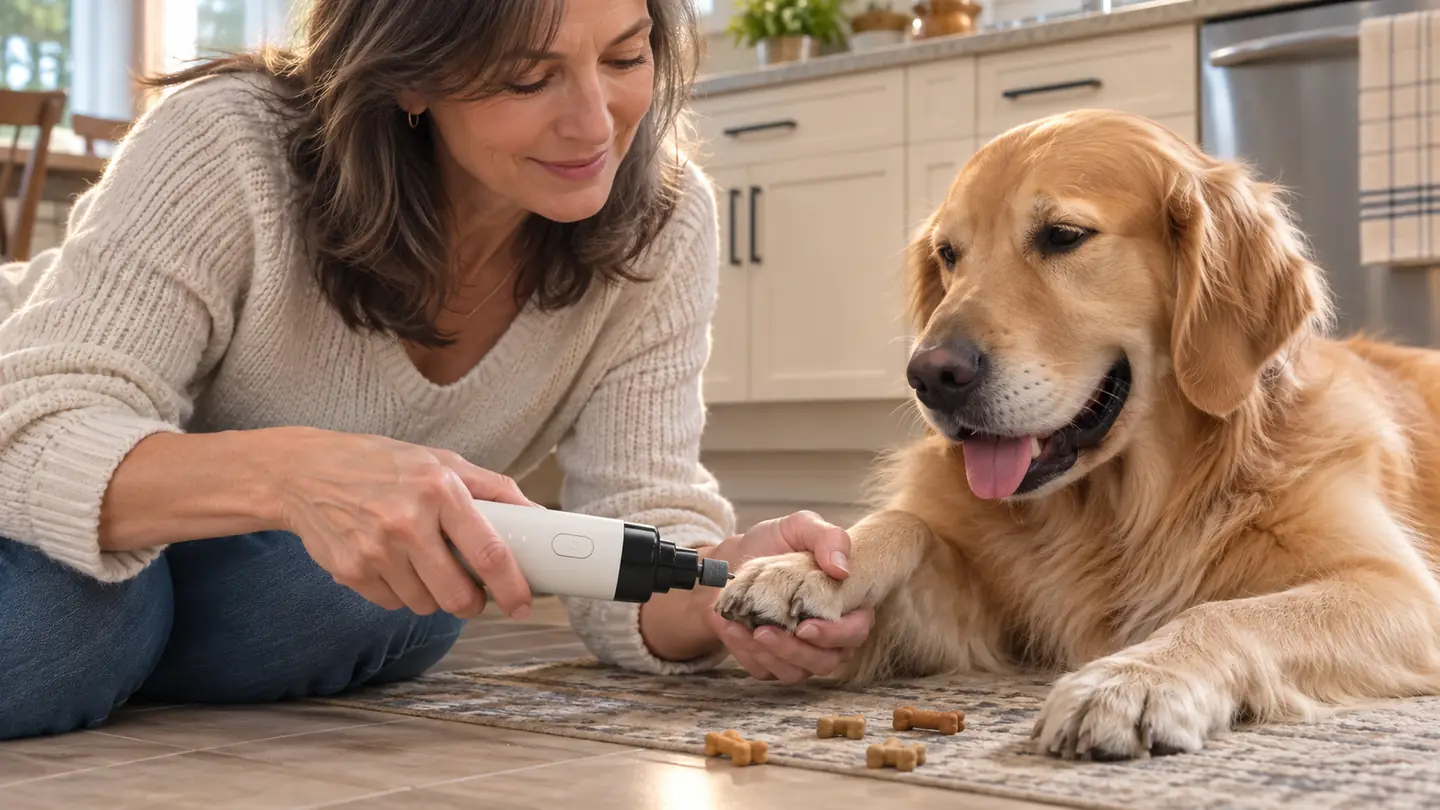
The single biggest mistake I made at first was going straight for the nails. Rocky had no reason to trust my hands near his feet, so of course he fought. Before you ever switch on a grinder, spend a week or two simply touching your dog's paws. Sit on the floor, take a front paw, hold it for a second, and give a treat the moment you let go. Work up to holding each toe and gently pressing on the nail. The goal is to make a paw in your hand boring and normal, not a signal that something stressful is about to happen.
Do this while he is relaxed, maybe after a walk or while he is already sleepy from a long day. A couple of minutes a day beats one long wrestling match a month. I did this with Rocky in the evenings for about ten days before the grinder ever made an appearance, and it made every later step easier. If your dog will not let you near his paws at all, this is the step to linger on, not rush past. Rushing this is exactly how home trimming turns back into a battle.
One more thing about this step, especially for owners of older or stiffer dogs. Slow down and go gently. Rocky has some hip stiffness now that he is twelve, and lying flat on the floor is not always comfortable for him. If your dog is the same, do the paw handling while he is lying on his side or even standing, whichever position he finds easiest, and never pin him down. A dog that is comfortable and not held down is a dog that stops fighting the trim. The moment you feel tension, back off a little and end the session on a calm note.
Step 2: Introduce the sound with the grinder switched off
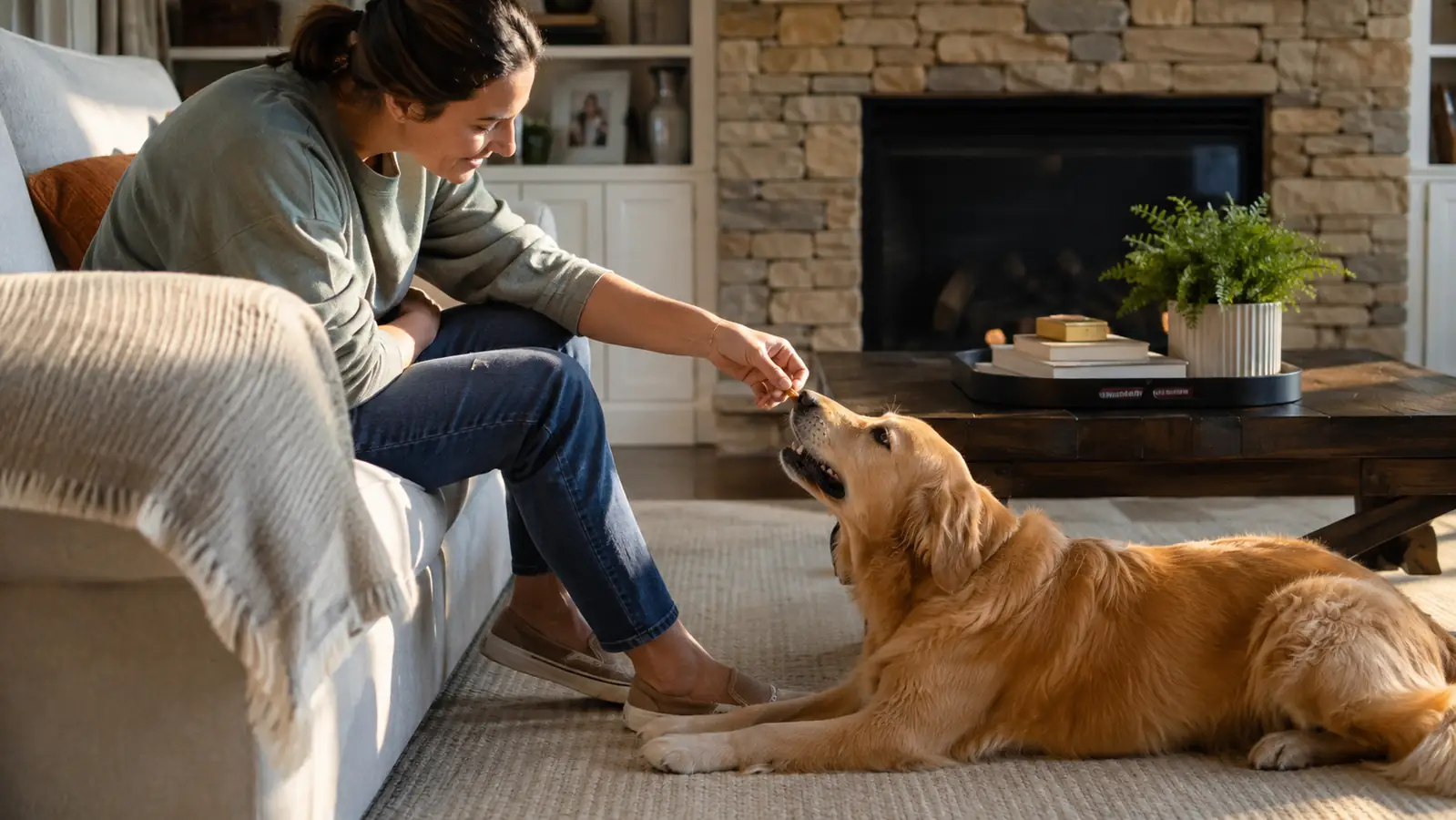
Dogs are often more scared of the noise than the actual trim. Rocky flinched the second he heard the high whine of the old clippers. A quiet grinder like the Casfuy helps a lot, but you still want to introduce it gently. Start with it switched off. Let him sniff it, then touch the flat of the head against his back or shoulder so he learns the tool against his body is not a threat. Give a treat every time he stays relaxed.
Then turn it on at its lowest speed and hold it a few feet away. Reward him for staying calm with the sound running. Over a couple of sessions, move it closer, rest it against his side, and finally against a paw with the motor on but slow. The goal is that the sound becomes an ordinary thing, the way the vacuum or the blender eventually becomes background noise. Take as many sessions as he needs. There is no prize for rushing this part, and every minute you spend here makes the actual trimming go twice as fast.
You can tell when the introduction is working by reading your dog's body. A relaxed tail, soft eyes, ears not pinned back, and a paw that stays in your hand are all good signs. If he keeps pulling his paw away or tries to leave, you have gone too fast. Drop back to just touching his side with the motor on, or even to the sniff-only stage, and build back up the next day. There is no wrong pace here, only wrong attempts. I have seen dogs that needed a full month before they would sit through the sound, and that is fine. They all get there in the end.
Step 3: Pick the right speed and start slow
The Casfuy has six speeds, and you almost never need the top of that range. I start every trim on the lowest setting, especially on the front paws where the nails are easier to see and the quick is easier to reach. Low speed means less heat and less panic, and for a dog that is new to grinding it is plenty to take off the first bit of nail. You can always move faster once you and your dog are both comfortable.
Only when I am comfortable and Rocky is relaxed do I move up a speed or two for the thicker rear nails, which are tougher and need a little more bite. A good rule of thumb is to use the lowest speed you can that still removes nail without you having to press hard. Let the grinder do the work. Pressing hard not only makes the nail heat up, it tells your dog this is unpleasant, and you will have to start the whole desensitization over again. Patient and light wins every time.
One practical tip that saved me a lot of fumbling: grind a little, then look, then grind a little more. Aim the grinder at the end of the nail, take a short pass, and glance at what you have removed. Doing it in small measured bits lets you stop the instant you see the dark dot that signals the quick, instead of discovering you went too far after it is done. And work front to back so you are always starting on the easier, more visible nails while your dog is still patient and your treats are still fresh.
Step 4: Use short passes and watch the quick
Hold the grinder like a pencil and touch the nail for two or three seconds at a time, keeping the spinning edge against the end of the nail. Short passes let the nail stay cool, because a grinder can warm the nail up fast, and a hot nail is a good way to end the session early. Lift the grinder away between passes and touch the nail with your finger. If it feels warm, give the nail a few seconds to cool before you go again. This bit of patience is the difference between a trim that feels fine and one that makes your dog pull away.
The quick is the pink vein running through the nail, and it is the thing everyone worries about with clippers. A grinder is gentler here because you are shaving off thin layers instead of taking one big cut, but you can still catch it if you get aggressive. On light nails you can usually see the pink. On dark nails, look at the freshly cut face of the nail: the moment you see a small dark dot in the center beginning to show, stop. That dot is where the quick is getting close. I keep styptic powder on the shelf right next to the grinder, because even careful people make mistakes, and being ready means the whole thing stays calm instead of turning into an emergency.
Step 5: Make it a habit, reward, and quit on a good note
Home trimming works when it is routine, not a scene. I do Rocky's nails about every two to three weeks, usually on a Sunday evening. I give him a treat after each paw, not just at the end, so he learns that every paw earns him something good. He gets one paw done, a treat, the next paw, another treat, and so on. Before long he started lying down for it on his own, which was more progress than I ever got with the clippers.
Here is the other habit that matters: stop on a good note. If Rocky gets restless at paw number three, I do not force the fourth paw. Better to end with a relaxed dog and one paw to finish tomorrow than to push through and turn trimming back into a fight. One paw a day is far better than all four in one miserable sitting. Over the weeks this becomes a calm little ritual instead of a chore we dread, and the Casfuy has made that easier to stick with than any tool I owned before it.
Rocky went from yanking his paw away at the sound of clippers to lying still for all four paws in about three weeks, and we have not seen the inside of a grooming room since.
What Else Helps
A couple of extras make the whole thing easier. Keep styptic powder or cornstarch nearby in case you nick the quick, and know in advance that a small amount of bleeding is scary but usually not an emergency. If you are unsure where your dog's quick sits, ask your vet or groomer to show you once. Most will point it out in a minute, and it will save you a lot of guessing at home. There is no shame in a little help at the start.
Pavement and sidewalk walks wear nails down naturally, so a dog that runs on concrete will need less grinding than one that stays on grass. A dog that walks on hard ground may only need a touch-up every few weeks. And if your dog has thick, dark nails and you have never ground them before, have the vet or groomer do the first one while you watch, then take over from there. It is cheaper than a repeated office visit and it builds your confidence for the next time. For most dogs, once every two to three weeks is plenty to keep nails off the floor and off your leg.
The last tip is about confidence more than anything. The first two or three home trims are going to feel awkward, and that is normal. You will grind one nail a little shorter than you meant, or you will stop early because you are not sure, and the dog will be fine either way. Nails grow back. What matters is that you keep the sessions calm and routine until they become background noise for both of you. Within a month you will wonder why you ever paid someone else to do a job that takes ten minutes and a quiet Sunday evening.
Same Routine, No More Vet Visits for a Ten Minute Job
I have been trimming Rocky's nails at home with the Casfuy grinder for close to a year now, and the routine in this guide is the one that finally stuck. If you are tired of the clipper fear or the grooming bill, this is the tool worth trying. Check today's price on Amazon and see if it ends your trimming drama the way it ended ours.
Amazon Check Today's Price on Amazon →